
REVIEW · HISTORICAL TOURS
Full Day Qatar’s North And West tour || History & Heritage
Qatar’s best stories sit beyond Doha. This full-day outing takes you across the country’s northern and western reaches, linking old pearling ports, abandoned villages, a UNESCO-listed fort, camel country, strange limestone formations, and Richard Serra’s enormous desert sculpture. It is a long day, but it gives you a much broader view of Qatar than a city tour alone.
I like the mix of old Qatar and modern art, especially the contrast between Al Zubara Fort and Serra’s four steel plates in the Brouq nature reserve. I also like the small group size, capped at six, since guides such as Abdullah, Junaid, Noor, Sajid, and Syed have been able to adjust the pace and spend extra time at places that interest you.
The main drawback is the amount of driving. Some stops are brief, and the camel-racing visit can amount to viewing the track from the vehicle rather than seeing a race. At $165 per person, the value depends heavily on your guide, group size, and enthusiasm for wide-open scenery and archaeological sites.
In This Review
- Key points before you book
- Why this tour adds something Doha cannot
- Al Khor harbor and Qatar’s pearling past
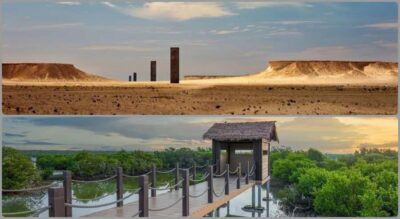
- Al Thakhira’s mangroves, a green surprise in the desert
- Purple Island and the Al Khor wetlands
- Al Zubara Fort and Qatar’s first UNESCO site
- Al Jumail, an abandoned village with a human scale
- Ash-Shahaniyah and the chance to see camels train
- Zekreet Fort ruins and Qatar’s strange rock country
- Richard Serra’s East-West, West-East sculpture
- The driving, group size, and real value of $165
- Who should take this Qatar day trip?
- Should you book it?
- FAQ
- How long does the North and West Qatar tour last?
- How many people can join the tour?
- Is pickup available?
- Is lunch included?
- What is included in the tour price?
- What happens if bad weather cancels the tour?
Key points before you book
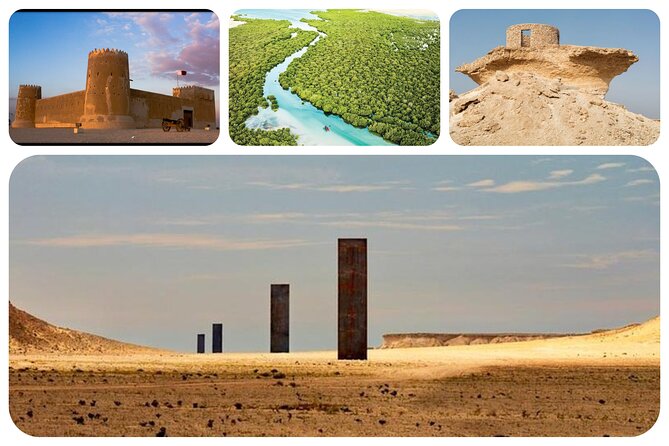
- Eight very different stops: You move from Al Khor’s fishing harbor and mangroves to ancient settlements, camel training grounds, limestone formations, and large-scale desert art.
- A full day outside Doha: The tour usually lasts six to eight hours, making it a strong choice if you want countryside and cultural sites in addition to museums and skyscrapers.
- Small groups help: With a maximum of six people, your guide may be able to adjust the time spent at individual stops.
- The early start can pay off: A 5:00 am departure has allowed some groups to reach the rock formations for sunrise and see camels training early in the morning.
- Lunch is not included: Bring snacks, and confirm the day’s meal plan before setting out.
- Weather matters: Poor conditions can lead to a new date or a full refund, while cancellation within 24 hours normally receives no refund.
Why this tour adds something Doha cannot
Doha is polished, modern, and easy to explore in a compact area. This excursion shows you the Qatar of fishing ports, saltwater channels, desert tracks, ruined villages, and isolated archaeological sites. You spend much of the day in an air-conditioned vehicle, but that is also what makes the route practical. Qatar is small on a map, yet the stops are spread far apart.
I would not choose this tour if you want long visits at every site. The schedule is designed to cover a wide area in one day. You get a taste of each place, along with explanations from your guide, rather than a slow archaeological study.
The best guides make a major difference. Sajid, a Qatari guide, has been praised for answering detailed questions about local culture and present-day Qatar. Junaid has also taken extra time at the camel track, following the animals and handlers around the course when training was under way. Other highly praised guides include Abdullah, Noor, Syed, Adil, Zohaib, and Abdul Nasir, though the person assigned to you can vary.
More history tours in Doha:
- Desert Safari + History to Modern City Tour
★ 5.0 · 174 reviews - From Doha: Culture & History Qatar Tour to the North & West
★ 5.0 · 51 reviews - 8-Hour Private Cultural Tour
★ 5.0 · 47 reviews
Al Khor harbor and Qatar’s pearling past
Al Khor is about 50 kilometers north of Doha and older than the capital, though much smaller. Its Arabic name refers to its position beside the sea on three sides. The town once depended on pearling and fishing, before cultured pearls changed the industry.
Your stop lasts about 30 minutes. You might see traditional wooden dhows in the harbor, walk along the corniche, or look toward the mangrove colonies. There is also a museum focused on fishing, pearling, and dhow building, although the precise time available for the museum depends on the day’s pace.
This is a useful opening stop because it puts Qatar’s wealth in context. Before oil and gas transformed the country, coastal work shaped daily life and trade. I find the harbor more rewarding when you look beyond the boats and imagine the skill and danger involved in gathering pearls from the sea.
The short visit can feel rushed if you want a full museum visit or a close look at the fish market. Still, it provides a clear introduction to the coastal culture that appears again later at Al Jumail and Al Zubara.
Al Thakhira’s mangroves, a green surprise in the desert
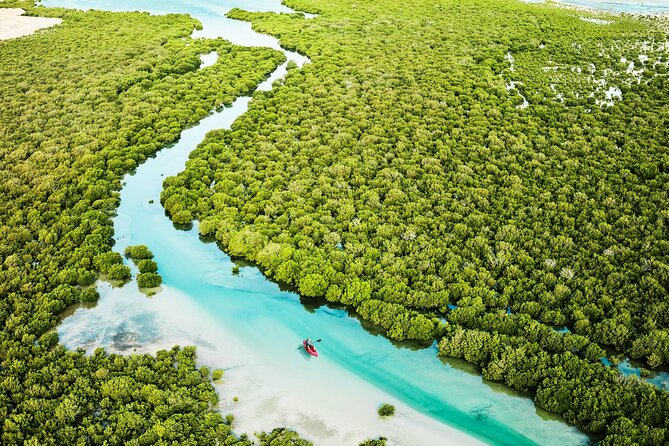
The mangroves at Al Thakhira are one of the route’s most unexpected sights. This coastal habitat supports birds, fish, crabs, and other wildlife while also helping protect the shore from erosion.
You have about 30 minutes here, so think of it as a scenic pause rather than a boat excursion or nature walk. The value comes from seeing a saltwater ecosystem in a country better known for sand and dry plains. If you enjoy birdlife and natural environments, this stop may appeal more than the shorter fort or market visits.
Conditions and timing affect what you see. The tour information does not promise a boat ride, wildlife sighting, or extended walk, so keep expectations modest. Even a brief look at the channels and vegetation helps explain how coastal life survives in Qatar.
Purple Island and the Al Khor wetlands
Bin Ghannam Island, usually called Purple Island, sits near Al Khor in northeastern Qatar. It is known for its natural setting, plant life, and wildlife, and it makes a good family day-trip location.
The planned stop is about 40 minutes. You should expect more open-air scenery than formal interpretation. The island’s name is linked to an old dye industry, but the real appeal here is the combination of shallow water, rocky ground, and coastal plants.
This is another stop where footwear and sun protection matter. The tour includes bottled water, coffee, and tea, but snacks are not provided. Bring something small to eat, especially if you are taking an early departure and do not want to wait until later in the day.
Purple Island also shows why this tour is not simply a fort-and-museum outing. The route includes natural places that help you see how Qatar’s coast and interior fit together.
A few more options to weigh up in Doha
- Doha: Safari, ATV, Camels, Sandboarding and Inland Sea Tour
★ 4.8 · 5,291 reviews - Doha: ATV, Quad/Buggy Dune Bashing, Camel Ride, Sandboarding
★ 5.0 · 3,784 reviews - Desert safari, Dune bashing, sandboarding, camel, ATV Option
★ 5.0 · 2,826 reviews - Qatar Gold Dune Safari, Dune Bashing,Camel Ride,Sand Boarding,Inland Sea Desert
★ 5.0 · 2,807 reviews
Al Zubara Fort and Qatar’s first UNESCO site
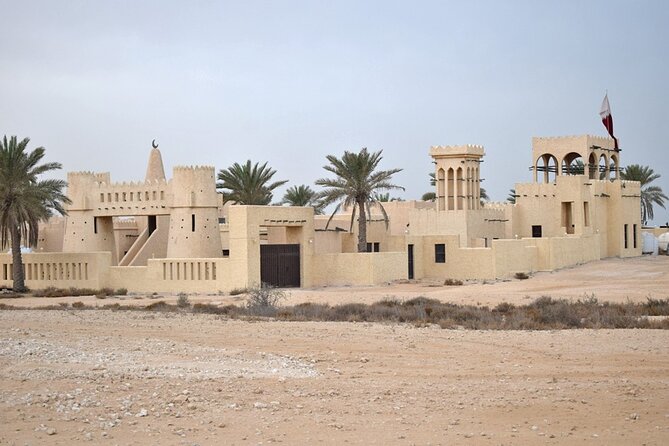
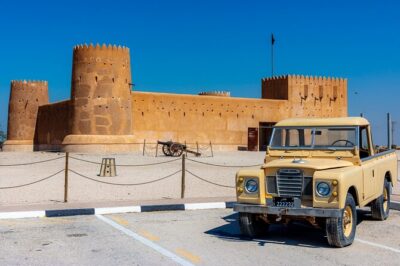
Al Zubara is the historical centerpiece of the northern route. The old settlement was once a port and a center for trade, fishing, and pearling. Today, the fort and surrounding archaeological area preserve the remains of that earlier town.
Plan on about an hour here. The fort was built beside the ruins of an older fort, and artifacts found by archaeologists are displayed inside the renovated building. The setting gives you more than a single restored structure. You can begin to understand the scale of the former settlement and why its position mattered.
The fort is Qatar’s first UNESCO World Heritage Site, which makes it an important stop for anyone interested in national history. Guides can explain the rise of Al Zubara, the coastal economy, and the hardships faced by people who worked at sea.
Some visitors find the fort itself less exciting than the wider archaeological area. That is fair. You should not expect a grand European castle with lavish interiors. Al Zubara’s appeal is its simplicity and sense of place. It works best if you are willing to picture a trading town from partial remains rather than look for a fully reconstructed attraction.
From a tower, you may be able to see Bahrain on a clear day. This is not guaranteed, but it adds a memorable geographical detail to the stop.
Al Jumail, an abandoned village with a human scale
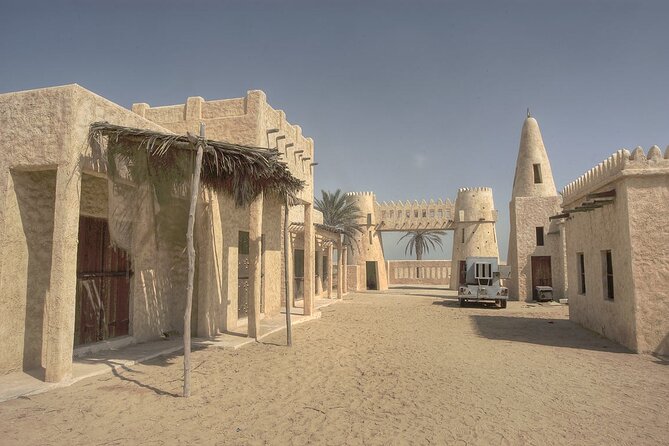
Al Jumail is an old fishing and pearling village, with houses made from limestone and mud. The planned visit takes about 30 minutes.
Here, the interest lies in the building methods and the quiet remains. These are not grand monuments. They are fragments of ordinary homes and a former community, which can tell you more about daily life than a polished museum display.
The stop suits anyone who wants to understand how Qatar’s coastal villages were built before modern construction. Look for the rough walls, simple forms, and relationship between the homes and the shore. You might find the site understated, especially after the more clearly presented Al Zubara Fort, but that is part of its character.
Your guide’s explanation matters here. Without context, old walls can look like little more than rubble. With a good guide, Al Jumail becomes a useful picture of village life and the country’s pearling era.
Ash-Shahaniyah and the chance to see camels train
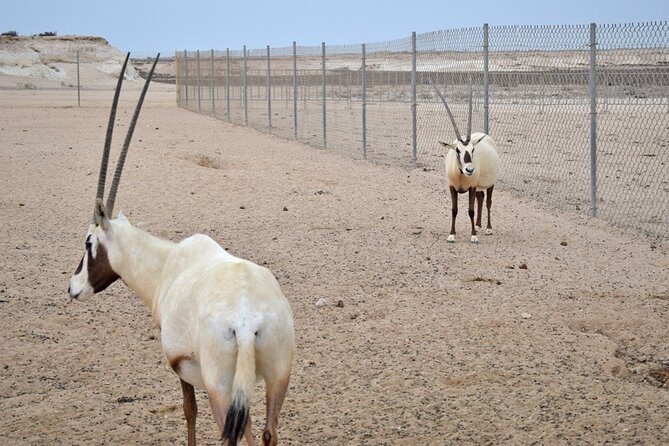
Ash-Shahaniyah is the stop with the most potential for an unscripted moment. The route passes a camel-racing track, where camels may be training.
The planned visit lasts about 30 minutes, but the experience depends entirely on activity at the track. Some groups have seen large camel groups arriving for morning training, while others have only driven beside the course and seen no camels at all. If racing or training is important to you, ask your guide at the start of the day about timing.
An early departure can improve your odds. One successful schedule left Doha around 5:00 am, reached the rock formations for sunrise, and arrived near Ash-Shahaniyah by about 8:30 am. That early hour may also make the desert drive more comfortable.
When camels are training, the scene can be wonderfully lively. Guides may follow the animals and handlers around the track by car, giving you a closer look at a sport that is deeply tied to Gulf culture. When nothing is happening, however, this becomes a quick roadside viewing stop. That uncertainty is worth keeping in mind.
Zekreet Fort ruins and Qatar’s strange rock country
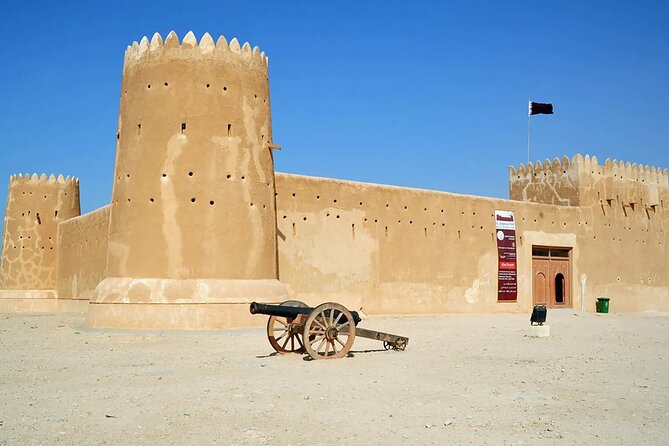
The western section changes the mood of the day. Zekreet Fort is one of Qatar’s few historical sites to have gone through two separate construction phases. The ruins are modest, but their remote position gives them atmosphere.
You have around 40 minutes here. The fort is not a large restored complex, so do not expect a long interior visit. The main reward is the combination of old masonry, open desert, and nearby limestone formations.
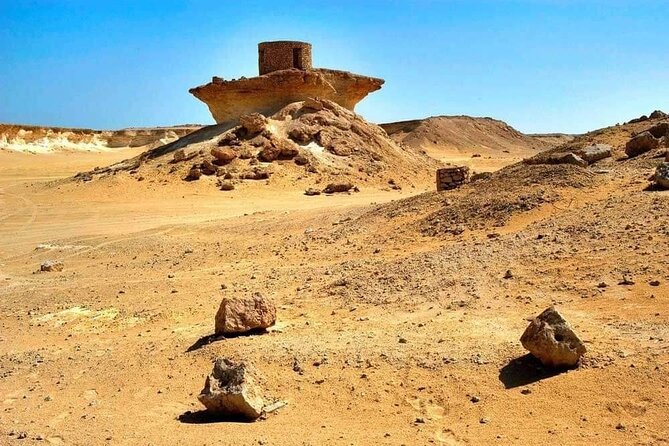
The Zekreet Peninsula is also known for unusual rocks, including a popular umbrella-shaped or mushroom-shaped formation. Other formations include the Eye in the Rock, according to the route described by visitors who took an early start. These shapes are excellent subjects for photography, especially in the softer light around sunrise.
This is where the tour can feel most like an adventure, but it is also where expectations need care. The route may include rough ground and short stops in exposed conditions. The tour information does not promise dune driving at every departure, though one account describes driving over dunes and into the interior. Ask what is planned for your date if off-road driving matters to you.
Richard Serra’s East-West, West-East sculpture
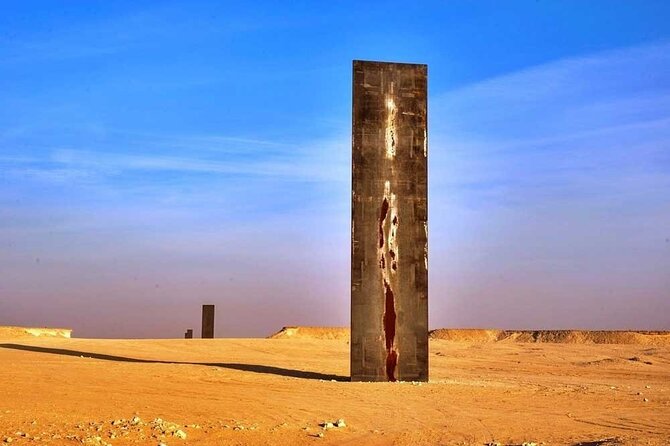
The final major stop is the most dramatic: Richard Serra’s East-West/West-East in the Brouq nature reserve.
Four steel plates, each more than 14 meters high, stretch across more than a kilometer of desert. Serra studied the shape of the ground to align the plates, creating a work that changes as you walk or drive toward it. The clean geometry against the bare surroundings is striking.
You have about 35 minutes. That is enough to take in the scale and photographs, though not enough for a long walk along the full installation. The sculpture is modern, but its setting makes it feel connected to the immense age and emptiness of the area.
For many people, this is the day’s highlight. It gives the tour a strong final note and prevents the experience from becoming only a sequence of ruins and coastal stops. I especially like the contrast between human settlement at Al Jumail and an artwork that treats the desert itself as part of the work.
The driving, group size, and real value of $165
At $165 per person, this is not a cheap sightseeing shuttle. Its value comes from combining several distant parts of Qatar in one day with an air-conditioned vehicle, bottled water, coffee or tea, and insurance.
A maximum group of six is a real advantage. In a small group, your guide can often answer questions, adjust the time at a favorite stop, or make an extra roadside visit when the schedule allows. Syed, for example, has adjusted time at individual sights and returned a family in time for a restaurant booking. Abdullah and Noor have also been praised for adding explanations and extra stops.
The price becomes harder to justify if you are the only person booked. One solo booking resulted in a much higher effective cost than the advertised starting rate. Confirm how pricing works for your party before paying, particularly if you are booking alone.
The tour also has no included lunch or snacks. Since the day includes long road sections, I would bring food and ask when a meal break is possible. Do not assume that a formal lunch stop is built into the schedule.
The overall rating is 4.9 from 229 ratings, with 97 percent recommending the experience. That strong result reflects many excellent guide-led days, but it does not remove the practical risks: vehicle problems have occurred, one pickup issue caused serious frustration, and guide quality can vary.
Who should take this Qatar day trip?
I would choose this tour if you have already seen central Doha and want to understand more of the country. It suits people who enjoy archaeology, photography, local culture, unusual natural settings, and long drives with changing scenery.
Families may appreciate the variety, especially if camel training is happening. Art lovers should make sure the Richard Serra installation remains on the route. Anyone interested in Qatar’s pearling economy will gain the most from connecting Al Khor, Al Jumail, and Al Zubara rather than treating each stop as an isolated photo opportunity.
I would hesitate if you dislike sitting in a vehicle, want polished museums, or need every stop to deliver a major attraction. Some places are small, weather can be harsh, and the camel track is not guaranteed to be active.
Pickup is offered, confirmation arrives at booking, and most people can participate. The experience requires good weather. You can cancel for a full refund up to 24 hours before the start, but cancellations or changes inside that period are not refunded or accepted.
Should you book it?
Book it if you want to see Qatar beyond Doha in one efficient day and you value variety over long visits. The strongest version of the tour includes an early start, active camel training, a helpful guide, clear weather, and enough time at Zubara and the Serra sculpture.
Before booking, confirm the pickup details, likely group size, guide arrangements, and whether the day includes a realistic food break. If you are prepared for substantial driving and a few modest stops, this is a worthwhile way to see Qatar’s old coast, desert west, and cultural roots. If you want a relaxed day with minimal road time, choose a shorter Doha-based experience instead.
FAQ
How long does the North and West Qatar tour last?
The experience lasts approximately six to eight hours.
How many people can join the tour?
The group has a maximum of six people.
Is pickup available?
Yes, pickup is offered.
Is lunch included?
No. Lunch and snacks are not included, so you should plan accordingly.
What is included in the tour price?
The tour includes an air-conditioned vehicle, bottled water, coffee or tea, and insurance.
What happens if bad weather cancels the tour?
If poor weather causes cancellation, you will be offered a different date or a full refund. You can also cancel at least 24 hours before the start time for a full refund.
Just added in Doha
- From Doha: Private West Coast and Camel Race Track Tour★ 4.7 · 4 reviews
- Doha: Night Desert Safari With Stargazing and Inland Sea★ 5.0 · 9 reviews
- Private Wakesurfing or Wakeboarding along Doha’s skyline★ 5.0 · 3 reviews
- Private Dunes Bashing | Desert Safari | Sand Boarding★ 5.0 · 5 reviews
- Doha-Private half day safari Sunrise/Sunset★ 5.0 · 6 reviews
- West of Qatar Tour★ 5.0 · 2 reviews
- East-West/West-East – By Richard Serra★ 5.0 · 23 reviews
- West Of Qatar Richard Serra sculpture, Mushroom Hills,Camel track★ 5.0 · 18 reviews
Historical Tours, compared.

Culture & History Qatar Tour to the North & West
Read our review →
Doha Combo a Rich Heritage from the Desert to the City
Read our review →
Full day City and North Qatar tour | History and Heritage
Read our review →
Combo Culture & Adventure: North Qatar Heritage & Desert Safari
Read our review →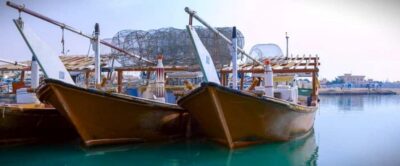
Browse the lists this tour appears in