
REVIEW · MUSEUMS
3-2-1 Qatar Olympic and Sports Museum: Admission Ticket
Sports history gets a striking home in Qatar. The 3-2-1 Qatar Olympic and Sports Museum combines Olympic stories, rare sporting objects, and hands-on displays in a building shaped around the five Olympic rings. I especially like the broad sweep from ancient sports to the modern era, and the chance to connect global Olympic history with Qatari sporting achievements. The main drawback is that the experience depends on how much time you give the galleries, and one low rating suggests the presentation may not satisfy everyone.
At $13 per person, this is a reasonably priced indoor cultural stop for a day in Al Rayyan Municipality. You receive access to permanent and temporary exhibitions, plus an audio guide through a QR code. The museum is wheelchair accessible, and its location works well for visitors arriving by car or public transportation.
In This Review
- Key points to know before you go
- A museum shaped by the Olympic rings
- From ancient contests to modern Olympic competition
- Olympic galleries with more than medals
- Qatar’s sporting story
- Interactive displays for different ages
- How long to spend inside
- Getting there by car or public transportation
- Is $13 good value?
- Accessibility and family planning
- Who will enjoy this museum most?
- Should you book the Qatar Olympic and Sports Museum?
- FAQ
- Where is the Qatar Olympic and Sports Museum located?
- How much does admission cost?
- How long is the ticket valid?
- What does admission include?
- Is the museum open every day?
- Is the museum wheelchair accessible?
- Can children visit without an adult?
- Can I reach the museum without a car?
Key points to know before you go
- The building reflects the Olympic rings: Spanish architect Joan Sibina designed the museum around the familiar five-ring symbol.
- The story stretches from ancient times to today: You get more than a display of modern medals and uniforms.
- Qatar gets its own place in the story: Galleries cover athletes and sporting achievements from Qatar alongside international Olympic history.
- Interactive displays add movement: Multimedia and hands-on elements keep the visit from becoming a long walk past glass cases.
- The $13 ticket covers the full museum: Admission includes permanent and temporary exhibitions for one day.
- Plan around Tuesday: The museum opens daily except Tuesdays, with parking available on site.
A museum shaped by the Olympic rings
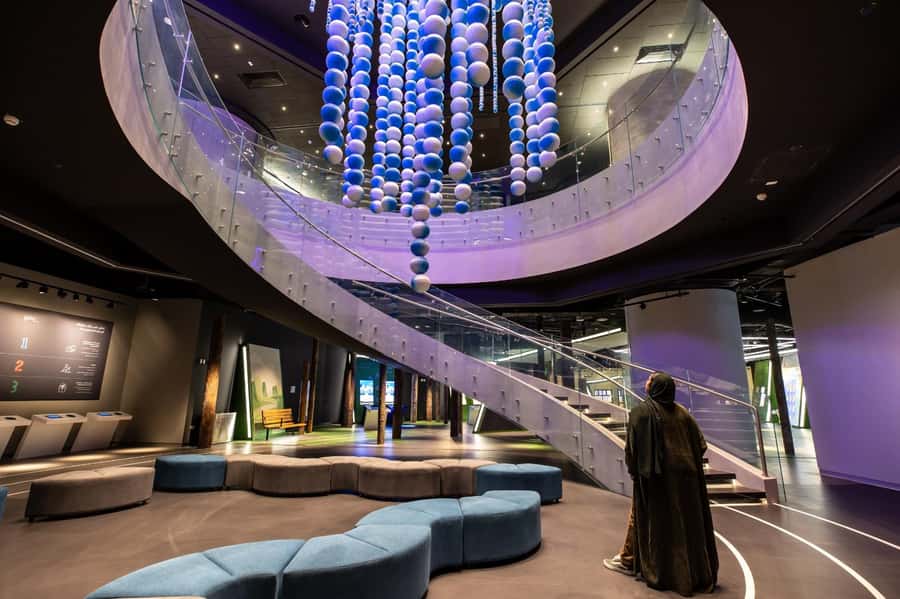
Before you reach the exhibits, the building itself sets the tone. Designed by Spanish architect Joan Sibina, the museum uses the form of the five interlocking Olympic rings as a visual symbol of sport, competition, and international connection.
That design gives the museum a clear identity. You are not entering an anonymous gallery with sports objects placed on walls. The architecture prepares you for a story about how athletic contests became a worldwide movement.
The structure also makes this a worthwhile stop even if you are not a devoted Olympic follower. The subject is familiar, but the setting gives it a sense of place. I like that the building carries a message before you read a single label: sport is both physical action and shared culture.
Still, architecture alone will not fill a visit. The real value comes from how the museum uses its galleries, objects, screens, and interactive stations to explain the subject.
More museums in Doha:
- National Museum of Qatar: Admission Ticket
★ 4.7 · 514 reviews - Doha: Museum of Islamic Art Admission Ticket
★ 4.7 · 178 reviews - Half-Day Wonders of Doha: Culture, Skylines, Museums & Souqs
★ 5.0 · 97 reviews
From ancient contests to modern Olympic competition
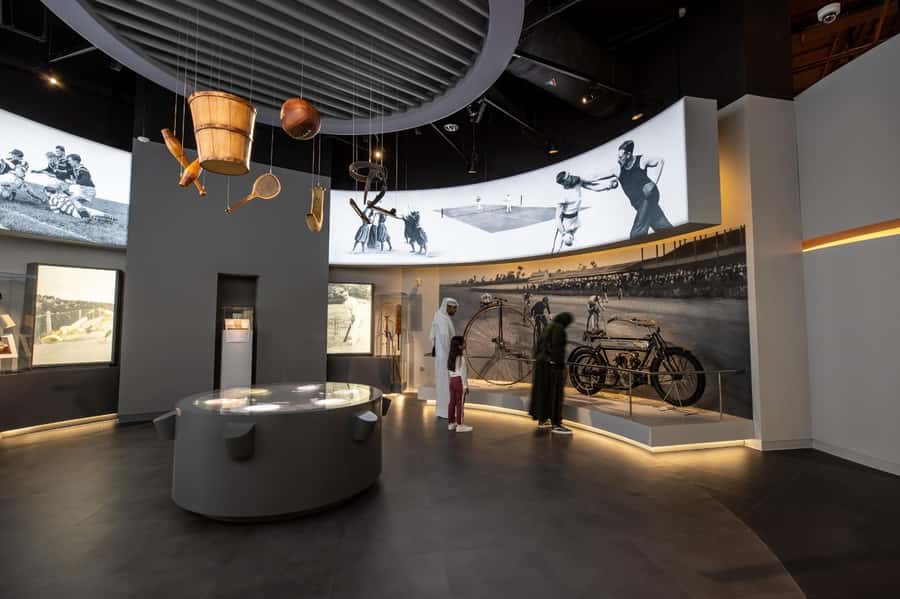
The museum begins with a wide view of sports history, reaching from ancient times into the modern era. That long timeline matters because it gives you context. Instead of treating the Olympics as an isolated event held every few years, the galleries present sport as a practice that has changed with society.
You can expect the museum to move through major themes rather than offer a single narrow account of Olympic competition. The displays explore how sports developed, how the Olympic movement took shape, and how athletic achievement became part of public life around the world.
This approach should suit you if you enjoy museums that explain ideas rather than simply present famous objects. A medal is interesting on its own, but it becomes more meaningful when you understand the competition, tradition, and social changes behind it.
The broad time span also helps families. Younger children may focus on the colorful screens and interactive sections, while adults can take more time with the historical material. Children under 16 must be accompanied by an adult, so this is best treated as a shared outing rather than a drop-off activity.
Do not expect a quick photo stop to reveal everything. You can walk through the main areas fairly quickly, but the museum rewards a slower pace. The QR-code audio guide gives you another way to add context, especially if you prefer listening to reading labels.
Olympic galleries with more than medals
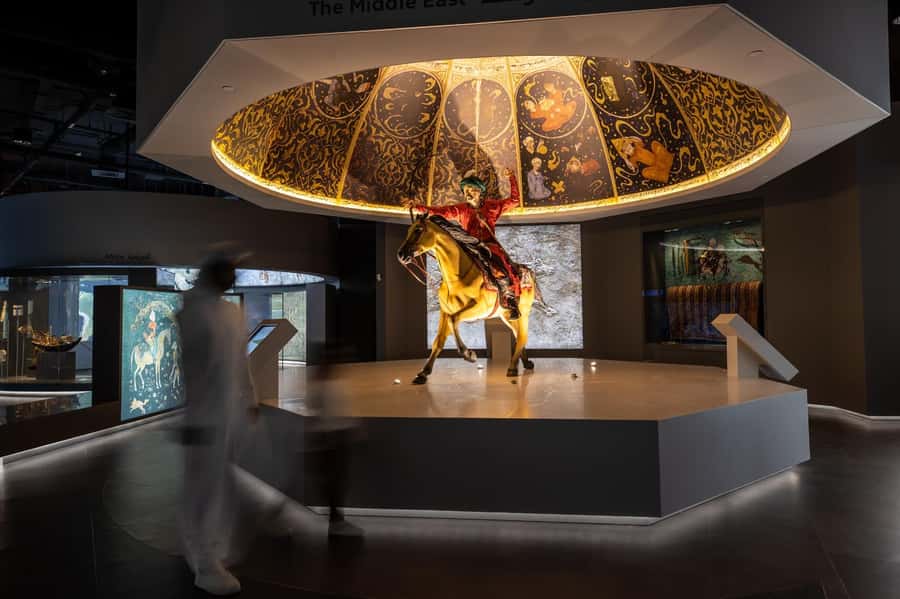
The Olympic sections form the heart of the museum. They look at the history of the Games and the wider meaning of the Olympic movement. You should expect a mixture of sports artifacts, multimedia content, and exhibition material rather than a simple row of trophies.
Rare sporting objects give the galleries a physical focus. Screens and digital displays then widen the story, showing how sport is presented, remembered, and experienced. This combination works well because it gives you both tangible pieces of history and material that can explain events in a more lively way.
I like the balance between old and new here. A museum about sport can become static if it relies only on uniforms, equipment, and photographs. Interactive features give you something to do, while multimedia displays help bring larger Olympic themes into view.
The quality of presentation is worth keeping in mind. The overall rating is 4.5 out of 5 from 15 ratings, including strong praise for the educational and immersive quality of the day. At the same time, one verified booking gave the experience only one star and said it needed improvement. That mixed result is a useful warning: the museum may be a great fit for someone who enjoys exhibitions and history, but less satisfying if you expect constant action or a highly guided tour.
Qatar’s sporting story
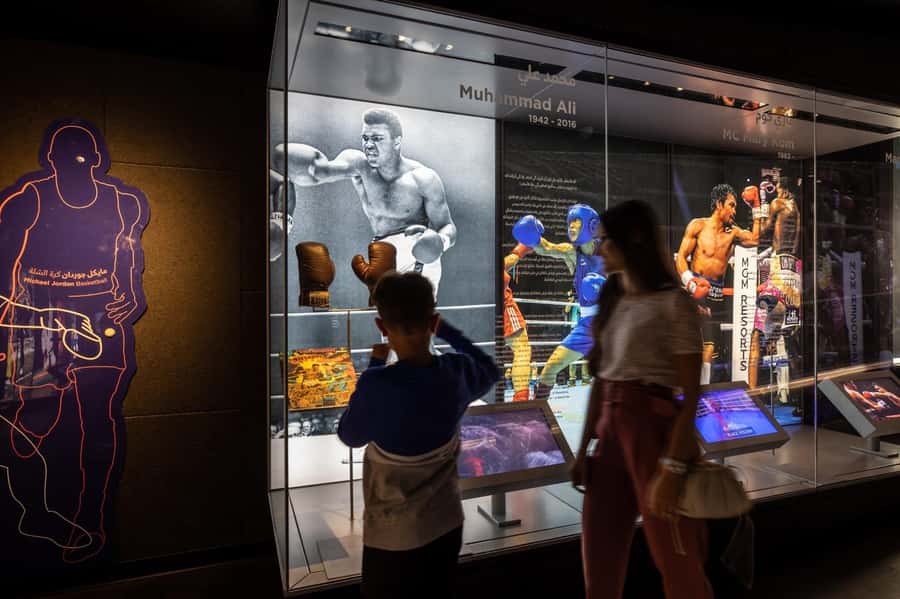
One of the museum’s most useful features is its attention to Qatar. The galleries do not treat the Olympics as a story belonging only to famous international powers. They also present sporting achievements from Qatar and place local athletes within the wider world of competition.
That local focus gives the museum more purpose than a generic Olympic exhibit. If you are visiting Qatar, you can connect the global subject to the country you are actually exploring. It also gives the museum a regional identity, rather than making it feel like a replica of an exhibition found anywhere else.
I would give this section proper time, even if you arrive mainly for the international galleries. Local sporting stories can be easier to overlook when the room is filled with major Olympic names, but they are often what makes a museum visit feel tied to its destination.
The information provided does not identify individual athletes, specific objects, or particular Olympic editions. You should therefore view this as a general account of Qatari sporting achievement, not a guaranteed display of any one star athlete or event. The permanent and temporary exhibitions may also change, so the exact emphasis can vary when you visit.
A completely different kind of day:
- Doha: Safari, ATV, Camels, Sandboarding and Inland Sea Tour
★ 4.8 · 5,291 reviews - Doha: ATV, Quad/Buggy Dune Bashing, Camel Ride, Sandboarding
★ 5.0 · 3,784 reviews - Desert safari, Dune bashing, sandboarding, camel, ATV Option
★ 5.0 · 2,826 reviews - Qatar Gold Dune Safari, Dune Bashing,Camel Ride,Sand Boarding,Inland Sea Desert
★ 5.0 · 2,807 reviews
Interactive displays for different ages
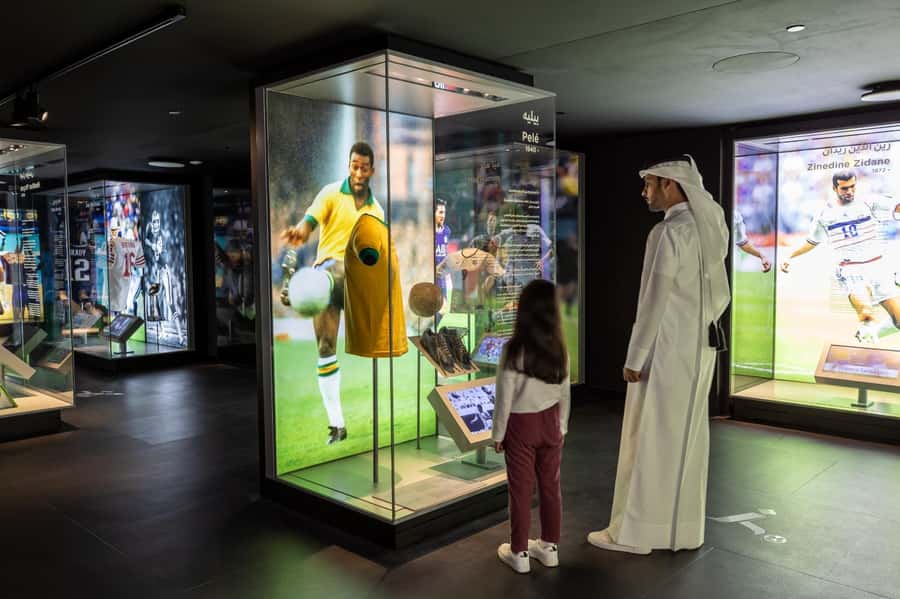
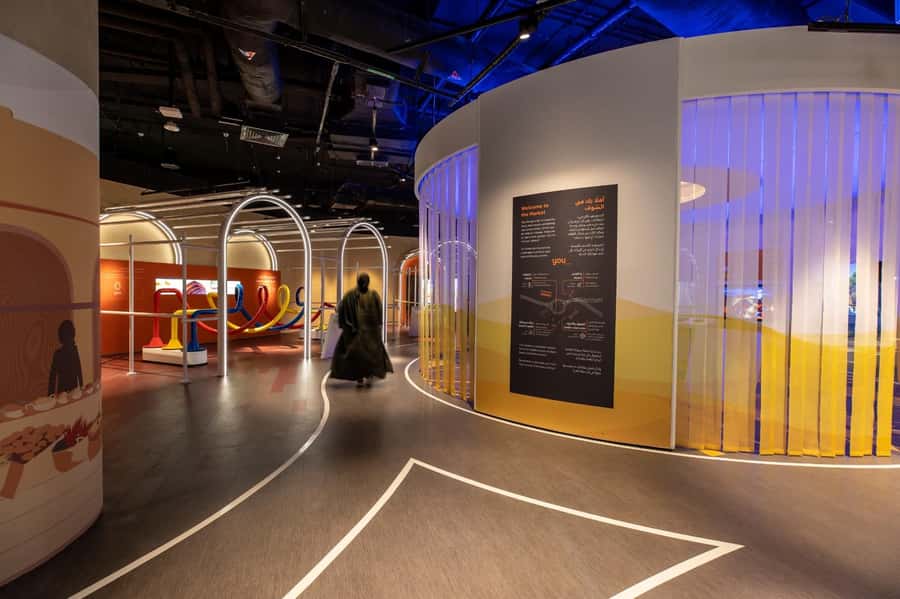
The museum includes interactive exhibitions and multimedia displays, which changes the pace of the visit. You are not limited to reading panels from start to finish. Hands-on elements can help explain movement, competition, and sporting ideas in a way that works for children and adults.
This is one of the strongest reasons to choose the museum over a purely traditional history gallery. Sport is about action, and digital features let the exhibition reflect that subject. If you are visiting with a family, these sections may keep younger children interested while you spend longer with the historical material.
There is a practical limit, though. The available information does not specify exactly which interactive activities are offered, how many there are, or whether every feature works for every age group. Think of them as a valuable part of the museum, not a guarantee of a full sports simulation center.
The audio guide is available through a QR code and is included with admission. That is useful if you want extra explanation without booking a private guide. You will need a suitable phone to access it, and the information provided does not specify the audio guide languages, so check the current details if language support is important to you.
How long to spend inside
Your ticket is valid for one day, not for a short timed slot. That gives you flexibility to fit the museum around other plans in Al Rayyan Municipality.
The stated duration is one day, but that describes ticket validity rather than a required full-day program. You can choose the amount of time that suits your schedule. A quick visit could focus on the main Olympic galleries, while a longer stay would allow more time for the audio guide, interactive stations, temporary exhibitions, and Qatari sports displays.
I would not rush this museum into a narrow gap between other appointments. The subject covers a large period, and the multimedia material may invite pauses. On the other hand, you do not need to reserve an entire day unless you enjoy reading every panel and exploring each gallery carefully.
A flexible ticket is especially helpful if you are building a day around several sights. You can plan the museum as a main stop or use it as an indoor break when the outdoor heat makes walking less appealing. The opening schedule matters: it is open daily except Tuesdays, but no opening hours are provided here, so check the current starting times before setting out.
Getting there by car or public transportation
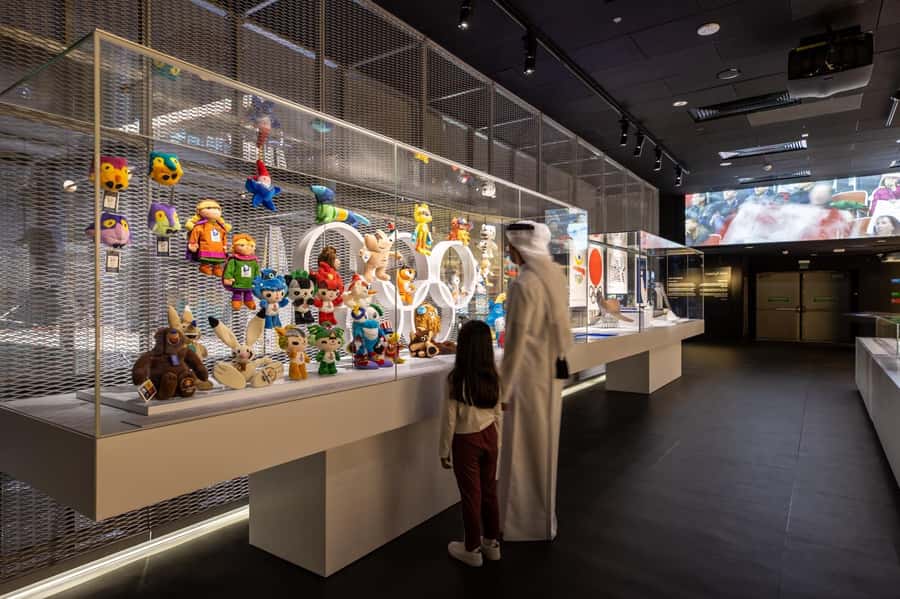
The museum is in Al Rayyan Municipality and is accessible by both car and public transportation. On-site parking is available, which makes driving straightforward for those using a rental car or local taxi service.
That parking option adds real value. You do not need to build your visit around finding a space nearby, and the museum can work well as part of a wider driving route. If you use public transportation, the location is still reachable, though the available information does not provide route numbers, station names, or walking distances.
Because exact transit details are not supplied, check your route on the day you go. The general point is clear: you are not limited to private transport, and the museum is set up for ordinary independent visits rather than requiring a group transfer.
Is $13 good value?
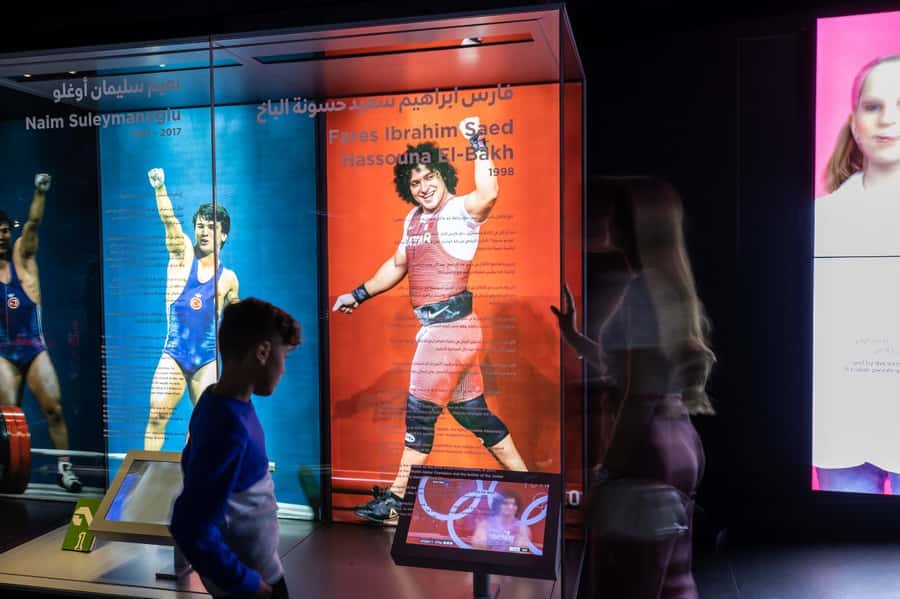
At $13, the ticket is fairly priced for a major museum with access to permanent and temporary exhibitions. You also receive the QR-code audio guide, so there is no stated extra charge for the museum’s basic interpretive support.
The value is strongest if you enjoy history, design, Olympic competition, or interactive museum displays. You are paying for a full cultural institution, not a short photo opportunity. The Qatar-focused material also adds local value for anyone who wants to understand how the country presents its sporting achievements.
The price may feel less attractive if you have little interest in sport or if you only plan to spend a few minutes inside. The one-star rating that called for improvement suggests that expectations matter. This is an exhibition-based museum, so the quality of your visit will depend partly on your patience with displays, reading, and multimedia content.
Free cancellation up to 24 hours before the visit and the reserve-now, pay-later option reduce the risk of booking. Those policies are helpful when your schedule in Qatar is still changing.
Accessibility and family planning
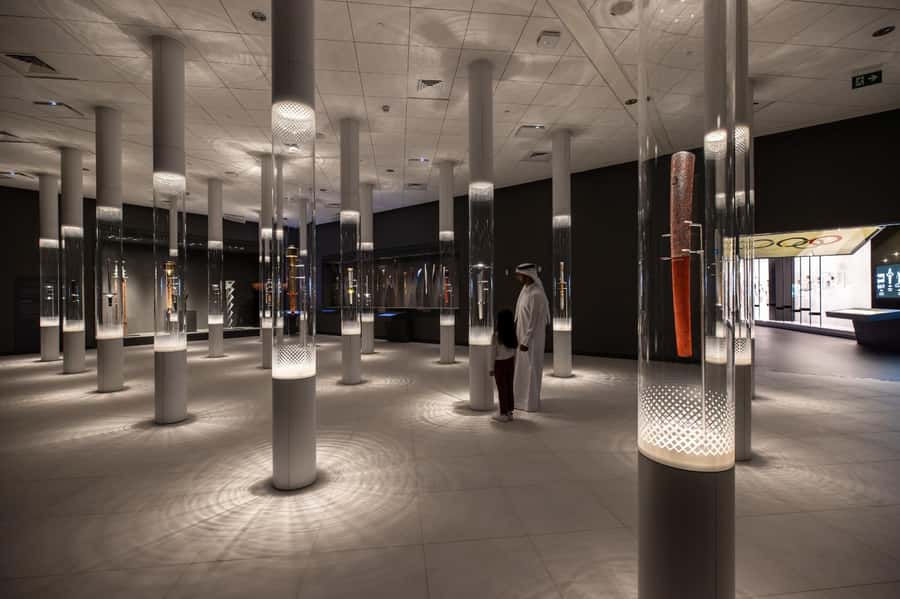
The museum is fully wheelchair accessible, which makes it a practical choice for visitors who need step-free access. The supplied information does not give details about accessible parking spaces, seating, captioning, or sensory accommodations, so contact the provider if you need one of those specific services.
Families should note the age rule: children under 16 must be accompanied by an adult. That is simple to plan for, and the interactive displays may make the visit more appealing to younger people than a conventional sports archive.
The museum also suits mixed-age groups. One person can follow Olympic history closely, another can focus on Qatari achievements, and children can spend time with the interactive material. You do not all need to approach the exhibits in exactly the same way.
Who will enjoy this museum most?
I would recommend it most strongly to:
- Olympic fans who want historical context, not only famous names
- Families looking for an indoor cultural activity with interactive elements
- Visitors interested in Qatar’s sporting identity
- Museum lovers who enjoy a mix of artifacts, screens, and architecture
- Anyone with a flexible day who wants a self-guided stop in Al Rayyan
You may want to skip it if your main goal is a guided outdoor activity, a live sporting event, or a short attraction with little reading. The museum’s strengths are its themes, displays, and range of material. It is not presented as a tour led by a named guide, and no group size or guided schedule is provided.
Should you book the Qatar Olympic and Sports Museum?
Book it if you want a thoughtful indoor stop that links ancient sport, the modern Olympics, and Qatar’s own athletic achievements. The $13 price, one-day validity, wheelchair access, parking, and included QR-code audio guide make it easy to fit into a Qatar itinerary.
I would especially choose it on a day when you can give the galleries time rather than squeezing them between rushed appointments. Go in expecting a museum built around objects, history, multimedia, and interactive sections. If that sounds like your kind of outing, the strong 4.5 out of 5 score is encouraging, while the isolated low rating is a reminder to keep expectations realistic.
FAQ
Where is the Qatar Olympic and Sports Museum located?
The museum is located in Al Rayyan Municipality, Qatar.
How much does admission cost?
Admission costs $13 per person.
How long is the ticket valid?
The ticket is valid for one day.
What does admission include?
Admission includes entry to the Qatar Olympic and Sports Museum, access to permanent and temporary exhibitions, and access to the museum audio guide through a QR code.
Is the museum open every day?
The museum is open daily except Tuesdays. Starting times can vary, so check availability before you visit.
Is the museum wheelchair accessible?
Yes. The museum is fully accessible for wheelchair users.
Can children visit without an adult?
No. Children under 16 must be accompanied by an adult.
Can I reach the museum without a car?
Yes. The museum is accessible by both public transportation and car. On-site parking is available for those who drive.
Just added in Doha
- From Doha: Private West Coast and Camel Race Track Tour★ 4.7 · 4 reviews
- Doha: Night Desert Safari With Stargazing and Inland Sea★ 5.0 · 9 reviews
- Private Wakesurfing or Wakeboarding along Doha’s skyline★ 5.0 · 3 reviews
- Private Dunes Bashing | Desert Safari | Sand Boarding★ 5.0 · 5 reviews
- Doha-Private half day safari Sunrise/Sunset★ 5.0 · 6 reviews
- West Of Qatar Richard Serra sculpture, Mushroom Hills,Camel track★ 5.0 · 18 reviews
- West of Qatar Tour★ 5.0 · 2 reviews
- East-West/West-East – By Richard Serra★ 5.0 · 23 reviews
Museums, compared.
Half-Day Wonders of Doha: Culture, Skylines, Museums & Souqs
Read our review →
Doha Night City Tour | Souq Waqif | National Museum | The Pearl | Katara Village
Read our review →
Iconic Sights, Culture & Museum of Islamic Art Tour
Read our review →
Visit Souq Waqif, Katara, Pearl, Museum, Cornishe
Read our review →
4-Hour Private Museum of Islamic Art in Qatar Tour
Read our review →
Browse the lists this tour appears in