
REVIEW · DOHA TOURS
Doha: Explore the North and West of Qatar With Transfers
Qatar changes fast beyond Doha. I like the way this small-group tour trades skyscrapers for mangroves, forts, desert rocks, and a camel-racing track, while the English-speaking guide adds useful context along the way. The Richard Serra steel installation is another strong point, especially if you enjoy modern art in unexpected places.
The tour also covers a lot in seven hours, with hotel pickup, a 4×4 vehicle, bottled water, and Karak tea included. My main caution is the pace: several stops last only 20 or 30 minutes, and long road transfers leave limited time for lingering at each site.
In This Review
- Key points at a glance
- Why this tour is a useful counterpoint to Doha
- Al Khor Harbour begins the coastal story
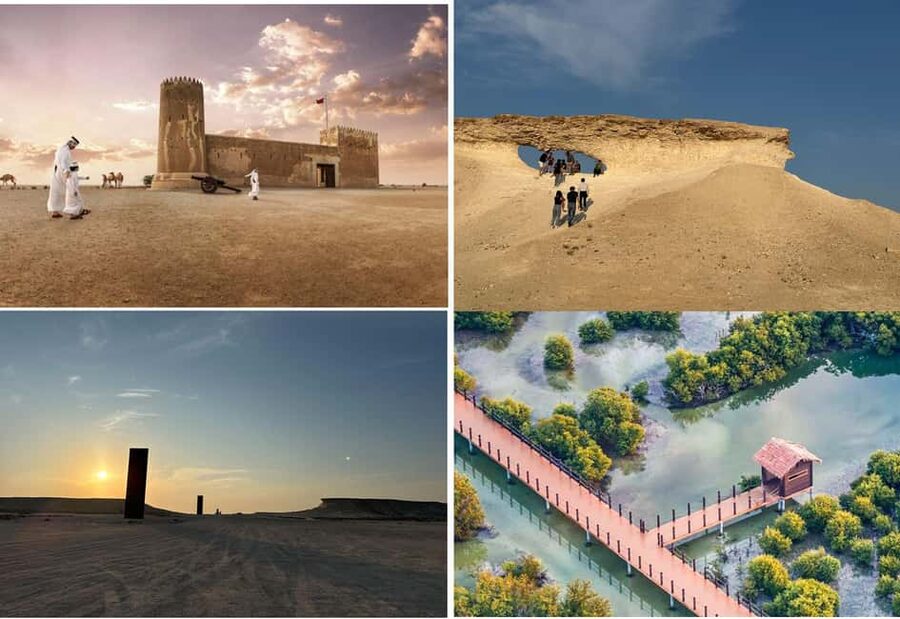
- Purple Island offers a short walk among mangroves
- Zubara Fort gives the day its strongest historical stop
- Zekreet shifts the mood from history to desert drama
- Zekreet Village and fort ruins reveal a quieter Qatar
- Richard Serra’s East-West/West-East is the day’s boldest image
- Al Shahaniya Camel Racetrack closes with local tradition
- The guide can make or break a packed route
- Who will enjoy this seven-hour outing
- Should you book the North and West Qatar tour?
- FAQ
- How long does the North and West Qatar tour last?
- Where does the tour begin and end?
- Is hotel pickup and drop-off included?
- What type of vehicle is used?
- Is food included?
- Is the tour offered in English?
- How large is the group?
Key points at a glance
- Al Khor and Purple Island: Start with Qatar’s coastal side, from a traditional harbour to mangroves and quiet walking paths.
- Zubara Fort: Spend about an hour at Qatar’s UNESCO World Heritage site, the most substantial historical stop of the day.
- Zekreet’s unusual setting: See limestone rock formations, village ruins, fort remains, and a desert setting far removed from Doha.
- Richard Serra’s steel artwork: Four huge steel slabs turn a remote desert valley into an extraordinary outdoor art space.
- Camel racing: Finish at Al Shahaniya Camel Racetrack, where a traditional Qatari sport adds movement and local character.
- Small-group value: With no more than 12 people, you get a more personal ride than on a large coach tour.
Why this tour is a useful counterpoint to Doha
Doha gives you museums, polished promenades, grand buildings, and plenty of air conditioning. This trip shows you a quieter Qatar. You spend much of the day on open roads, with broad desert views, coastal vegetation, old settlements, and sites that are difficult to visit efficiently without a vehicle.
I especially like the range. The day is not built around one fort or one photo stop. You move from fishing heritage to mangroves, then to trade history, rock formations, contemporary art, and camel racing. That variety makes the tour a good choice if you want a first look at Qatar beyond the capital.
The tradeoff is that the route covers a large area. You should expect a fair amount of time in the SUV. The drive is part of the experience, but this is not a slow, walk-heavy day. It is better for seeing several distinct parts of the country than for spending half a day at one archaeological site.
The tour costs $108 per person. That is a reasonable package for a seven-hour outing when you factor in hotel pickup and drop-off, an air-conditioned 4×4, a driver-guide, water, and Karak tea. You are also paying for route planning and access to places that are spread far apart. Meals are not included, so plan around that limitation.
A few more options to weigh up in Doha
- Doha: Safari, ATV, Camels, Sandboarding and Inland Sea Tour
★ 4.8 · 5,291 reviews - Doha: ATV, Quad/Buggy Dune Bashing, Camel Ride, Sandboarding
★ 5.0 · 3,784 reviews - Desert safari, Dune bashing, sandboarding, camel, ATV Option
★ 5.0 · 2,826 reviews
Al Khor Harbour begins the coastal story
The first sightseeing stop is Al Khor Harbour, reached after roughly 40 minutes by Jeep or SUV from Doha. The harbour offers a calm introduction to Qatar’s older coastal economy, with views over the sea and a chance to hear about traditional fishing.
This is a short stop of about 20 minutes, so think of it as a way to get your bearings rather than a full harbour visit. You can take photographs, enjoy the quieter setting, and listen as your guide explains how fishing shaped life in coastal Qatar.
I like this opening because it gives the day a human starting point. Qatar is often presented through its modern architecture and energy wealth, but the harbour points to a much older way of life. If you want a long waterfront walk, this stop may feel brief. If you want a gentle start before the longer drives, it works well.
Purple Island offers a short walk among mangroves
From Al Khor, the tour continues to Purple Island. The stop lasts about 30 minutes and includes a visit, guided sightseeing, photographs, and a walk along tranquil paths.
The island is known for its mangroves and coastal wildlife. The setting provides a welcome change from Doha’s built-up center, with low vegetation, open air, and a quieter rhythm. You may find the mangroves especially appealing if you enjoy nature photography or want a break from forts and desert views.
The name can create the wrong expectation. This is not presented as a bright purple beach or a theatrical natural spectacle. Its appeal is more subtle, based on the coastal plants, calm pathways, and sense of space. The short visit means you should wear comfortable shoes and be ready to walk without expecting a long nature outing.
Purple Island also helps explain the variety of Qatar’s northern coast. The country is not only sand and city. Coastal habitats survive alongside roads and development, and this stop gives you a quick look at that side of the country.
Zubara Fort gives the day its strongest historical stop
After another drive of about 40 minutes, you reach Al Zubara Fort. The visit lasts around one hour, making it the longest stop on the route and the best place to slow down and focus on Qatar’s past.
Zubara was once an important trading post, and the fort now forms part of a UNESCO World Heritage site. Here, the guide can explain Qatar’s place in regional trade and the work involved in preserving the site. That added explanation matters. A small desert fort can look simple at first glance, but its meaning becomes clearer when you understand its connection to commerce and settlement.
I would give this stop your fullest attention. Take time to examine the fort, photograph its strong lines against the surrounding open country, and ask questions about how it was used. The hour is long enough to make the visit feel worthwhile without turning it into an exhausting museum session.
The site is also a useful reminder that Qatar’s history is not limited to the last few decades. The modern capital can make the country’s older settlements seem distant, but Zubara connects today’s Qatar with its former trading networks.
A completely different kind of day:
- Qatar Gold Dune Safari, Dune Bashing,Camel Ride,Sand Boarding,Inland Sea Desert
★ 5.0 · 2,807 reviews - Doha: Guided City Tour with Airport and Hotel Pickup
★ 4.9 · 2,357 reviews - Doha :Half Day Desert Safari | Camel Riding | ATV | Sand Surfing
★ 5.0 · 1,907 reviews - Doha : City Tour To All Main Attractions Including Transfers
★ 4.9 · 1,849 reviews
Zekreet shifts the mood from history to desert drama
A transfer of about 40 minutes takes you toward Zekreet and the western part of Qatar. The exact stop descriptions separate the rock formations, traditional village, and fort ruins, but together they create the most atmospheric part of the day.
The Zekreet Rock Formation features unusual limestone cliffs rising from the desert. Their shapes give you some of the tour’s best photo opportunities, particularly if you like stark scenes with pale rock, open ground, and little visual clutter.
This is not a polished attraction with many facilities. Its appeal comes from the raw setting. You can look across the rock formations, walk briefly, and see how wind and time have shaped the terrain. The visit lasts about 30 minutes, so the guide will keep the group moving.
The western desert feels very different from Al Khor’s coastal vegetation. That contrast is one of the tour’s strengths. Within the same day, you see mangroves and limestone outcrops, each showing a different side of Qatar’s geography.
Zekreet Village and fort ruins reveal a quieter Qatar
The stop at the traditional village lasts about 30 minutes. You can walk among historic ruins and traditional structures while the guide explains the setting and the connection to rural life.
The village is quiet and spare. Do not expect a restored town filled with shops or staged performances. Instead, you get a brief look at a settlement surrounded by desert, where the remains and simple architecture give the place its character.
There is also a short visit to Zekreet Fort Ruins, listed as about 10 minutes. That is enough for photographs and a quick explanation, but not enough for a lengthy archaeological inspection. If historic ruins are your main interest, you may wish the stop were longer. Still, it fits neatly into the wider western Qatar route.
Taken together, the village and fort ruins provide a useful contrast with Zubara. Zubara carries greater historical weight and allows more time for exploration. Zekreet is more about atmosphere, traces of earlier settlement, and the feeling of being far from the capital.
Richard Serra’s East-West/West-East is the day’s boldest image
Near Zekreet, the tour reaches Richard Serra’s East-West/West-East installation. The artwork consists of enormous steel slabs set across the desert, creating a dramatic line through the surrounding terrain.
You can walk around the installation and view it from different angles during the 30-minute stop. The scale is the point. The dark metal shapes look severe against the pale desert, and the empty setting gives the work room to command attention.
You do not need to be an art specialist to appreciate this stop. The guide can provide context, but the work also succeeds as a visual experience. It asks you to notice distance, proportion, and the relationship between human construction and the natural surroundings.
This is one of the most distinctive parts of the tour because it is difficult to compare with a standard fort or viewpoint. You get contemporary art without a gallery, ticket queue, or crowded city setting. If modern art is not your interest, you may find the stop brief and unusual rather than essential. Either way, it gives the day a memorable change of pace.
Al Shahaniya Camel Racetrack closes with local tradition
The final major stop is Al Shahaniya Camel Racetrack, reached after about 30 minutes by 4×4. The visit lasts around 20 minutes and centers on the camel-racing tradition.
This ending works because it brings the tour back to living culture. The camels, track, and desert setting offer something different from the preserved fort sites. You are not simply looking at the past. You are seeing a tradition that still matters in Qatar.
The timing is short, so the experience depends on what is happening at the track when you arrive. The tour description presents camel racing as part of the visit, but no guarantee is given about a particular race schedule. I would treat it as a chance to see the track and learn about the sport, with active racing possible rather than something to plan your entire day around.
The camel racetrack was the favorite part for one recent participant, while others especially enjoyed the mangroves and rock formations. That mix makes sense. The stop is quick, but it has a clear sense of place and provides a lively final image before the return to Doha.
The guide can make or break a packed route
Because the tour covers so much ground, the guide’s role matters. Recent departures have featured guides named Arum, Aram, and Muzzi. The strongest praise focuses on clear explanations, engaging storytelling, good driving, and the ability to answer questions about Qatar and the places along the route.
Arum was singled out for explaining the country’s past and for making the day informative without losing its easygoing feel. Muzzi was also praised for keeping explanations interesting and for combining guiding with confident driving. Guide assignments can change, so you should not assume one particular person will lead your departure, but the feedback points to a consistently valued part of the experience.
The small-group limit of 12 people is important here. In a crowded coach, short stops can feel rushed and impersonal. A smaller vehicle makes it easier to hear the guide, ask questions, and move in and out of sites without managing a large group.
Transportation is by an air-conditioned 4×4, with hotel pickup and drop-off in Doha. That is a practical benefit in Qatar, especially on a route with several long transfers. Bottled drinking water and traditional Karak tea are included. Since meals are not included, you should account for the fact that this is a full day out without a supplied lunch.
Who will enjoy this seven-hour outing
I would choose this tour if you want a broad first look at Qatar outside Doha. It suits you especially well if you enjoy combining history, desert scenery, coastal nature, contemporary art, and local traditions rather than focusing on one subject.
It is also a good fit for a short stay. You can see several distant areas without arranging separate transport or working out a complicated route yourself. Hotel pickup and return make the day easier, particularly if you are unfamiliar with Doha.
You may want a different experience if you prefer long hikes, beach time, detailed archaeology, or a relaxed schedule. Most stops are short, and the road time is unavoidable. The tour is about range and contrast, not extended time at every location.
The activity is listed as wheelchair accessible, although the information does not describe the exact conditions at each outdoor stop. If you use a wheelchair, confirm the practical details before booking, particularly for the walking areas at Purple Island, Zekreet, and the desert artwork.
Free cancellation is available up to 24 hours before departure, and you can reserve now and pay later. Those terms offer useful flexibility when your Doha plans are still changing.
Should you book the North and West Qatar tour?
Book it if your goal is to see how varied Qatar can be beyond Doha in one well-organized day. The strongest reasons are the UNESCO-listed Zubara Fort, the unusual Richard Serra installation, the coastal stop at Purple Island, and the chance to visit Al Shahaniya Camel Racetrack.
At $108, the tour offers solid value for the transport, guide, vehicle, refreshments, and wide route. Just bring realistic expectations: you will spend time driving, several visits are short, and meals are not included.
If you want a practical overview with strong photo opportunities and useful cultural explanation, this is an easy choice. If you want to linger, wander, and set your own pace, rent-free time at each stop would be more important than the convenience of a guided route.
FAQ
How long does the North and West Qatar tour last?
The tour lasts seven hours, including transportation from Doha and the return journey.
Where does the tour begin and end?
Pickup is provided in Doha, and the tour returns to Doha after the final stop at Al Shahaniya Camel Racetrack.
Is hotel pickup and drop-off included?
Yes. Hotel pickup and drop-off in Doha are included.
What type of vehicle is used?
Transportation is provided in an air-conditioned 4×4 Jeep or SUV.
Is food included?
Meals are not included. Bottled drinking water and traditional Karak tea are included.
Is the tour offered in English?
Yes. The tour includes a live English-speaking guide.
How large is the group?
The tour is a small-group experience with a maximum of 12 participants.
Just added in Doha
- From Doha: Private West Coast and Camel Race Track Tour★ 4.7 · 4 reviews
- Doha: Night Desert Safari With Stargazing and Inland Sea★ 5.0 · 9 reviews
- Private Wakesurfing or Wakeboarding along Doha’s skyline★ 5.0 · 3 reviews
- Private Dunes Bashing | Desert Safari | Sand Boarding★ 5.0 · 5 reviews
- Doha-Private half day safari Sunrise/Sunset★ 5.0 · 6 reviews
- East-West/West-East – By Richard Serra★ 5.0 · 23 reviews
- West Of Qatar Richard Serra sculpture, Mushroom Hills,Camel track★ 5.0 · 18 reviews
- West of Qatar Tour★ 5.0 · 2 reviews
Doha Tours, compared.

Safari, ATV, Camels, Sandboarding and Inland Sea Tour
Read our review →
ATV, Quad/Buggy Dune Bashing, Camel Ride, Sandboarding
Read our review →
Desert safari, Dune bashing, sandboarding, camel, ATV Option
Read our review →
Qatar Gold Dune Safari, Dune Bashing,Camel Ride,Sand Boarding,Inland Sea Desert
Read our review →
Guided City Tour with Airport and Hotel Pickup
Read our review →
Half Day Desert Safari | Camel Riding | ATV | Sand Surfing
Read our review →
City Tour To All Main Attractions Including Transfers
Read our review →